Announced to Death: How the Hype Machine Swallowed the Drop
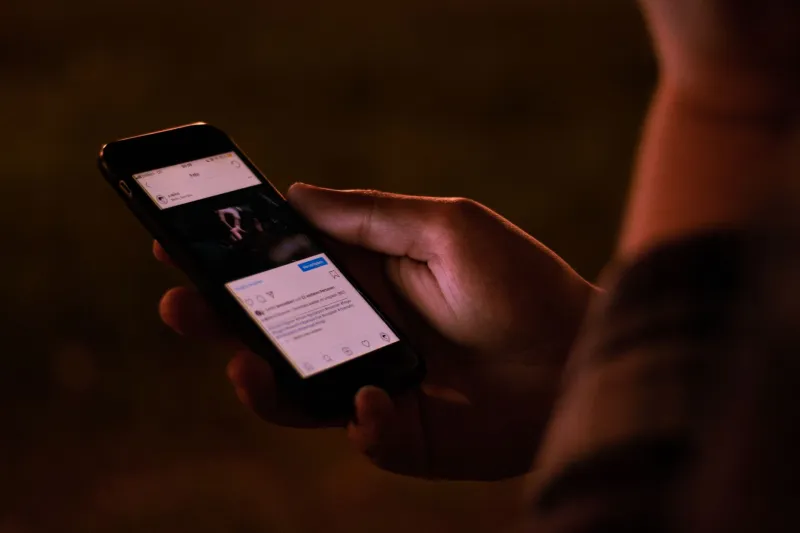
There's a specific kind of dread that lives in a music fan's Instagram feed right now. You know the one. A blurry, high-contrast image. A date in a sans-serif font. A caption that says absolutely nothing while implying everything. Another announcement about an announcement.
Somewhere along the way, the reveal became the product. And now the actual release — the music, the thing that was supposed to matter — is arriving into a room full of people who already checked out.
The Build-Up That Built a Wall
The logic behind the slow-burn tease made sense once. You drop a cryptic post, fans speculate, the algorithm rewards the engagement, anticipation builds, and by the time the song hits, the audience is primed and ready. That playbook worked beautifully — for about three years, maybe four.
Now? Everyone's running it. Every artist, from a bedroom producer in Atlanta with 4,000 followers to a major-label act with a full campaign budget, is executing the same teaser arc. Countdown timers. Merch pre-drops. "Something's coming" Stories that expire before anyone cares.
"I spent two weeks building up to a single," says Mara Voss, an indie-pop artist based in Chicago who's been self-releasing for the past three years. "I did the whole thing. Snippets, a trailer, a pre-save link. By the time the song actually came out, my engagement was lower than if I'd just dropped it cold. People were tired of hearing about it before they ever heard it."
That's the trap. And it has a name now, at least in the circles where people obsess over this stuff: announcement fatigue.
Everyone's Revealing, Nobody's Watching
The attention economy has a dirty secret: it rewards novelty, not repetition. The first tease gets the click. The second gets a scroll. By the fifth piece of pre-release content, even your most loyal followers are unconsciously training themselves to wait — or worse, to ignore.
Derek Salinas, a digital strategist who works with independent artists on release campaigns, has watched this pattern accelerate over the past two years. "The mistake artists make is thinking that more touch points equals more excitement," he says. "But there's a ceiling. After a certain point, you're not building anticipation, you're building immunity. You're teaching your audience that nothing you post is the real thing."
The irony is brutal. The tools that were supposed to give independent artists the power to compete with major-label rollouts have, in aggregate, made everyone's rollouts feel equally forgettable. When every artist has access to the same countdown timer plugin, the countdown timer means nothing.
The Paradox of the Exclusive
Here's where it gets really interesting for a platform like ours. The whole premise of a reveal — a genuine, first-listen, nobody-else-has-this moment — is supposed to cut through exactly this kind of noise. Exclusivity works because scarcity works. But exclusivity requires restraint, and restraint is genuinely hard when every platform is incentivizing you to post something every single day.
"I've had artists come to me with actual exclusive material — unreleased collabs, early mixes, stuff that would genuinely move the needle," Salinas says. "And then they've already posted three teaser clips on TikTok, done a Spotify pre-save push, and told their email list what the song sounds like. By the time we're ready to do the exclusive drop, it's not exclusive anymore. They revealed the reveal."
That phrase lands hard: they revealed the reveal. The announcement ate the announcement.
What Actually Cuts Through Now
So what works? The artists and strategists who are navigating this well seem to share one instinct: compression.
Rather than stretching a campaign across weeks of mounting teasers, they're collapsing the window. A surprise drop with a single, well-placed piece of context — one post, one moment, one reason to care right now — tends to outperform the extended build. It's counterintuitive in a culture that fetishizes the rollout, but the data keeps pointing the same direction.
Jordan Tae, a producer and rapper out of Houston who's been building a following in the underground R&B space, abandoned the traditional teaser model entirely after a release last year underperformed despite what he describes as "a pretty solid campaign."
"I went back and looked at my analytics and realized my reach actually peaked on the first teaser post and then slowly died every time I posted after that," he says. "So now I just drop. I'll put out one post that says the song is out, maybe a 15-second clip with it, and I've seen better first-day numbers than anything I did with a two-week build."
This isn't a universal prescription. Context matters — an artist with a massive, engaged fanbase can sustain a longer campaign because their audience has the depth to absorb multiple touch points without burning out. But for most emerging artists, that depth isn't there yet, which means every wasted post is a withdrawal from an account that can't afford the overdraft.
The Announcement as Content Clutter
There's a cultural dimension here too. We are, collectively, in a moment of profound content fatigue. Streaming libraries are infinite. Social feeds are relentless. The ambient noise of the internet has never been louder. In that environment, the announcement — the thing that was supposed to signal importance — has become just more content. It blends in. It scrolls past.
The artists who are actually breaking through right now tend to be doing one of two things: either they're moving so fast that the audience doesn't have time to get numb, or they're moving so deliberately — with such specific, earned restraint — that when they finally do speak, people listen.
Neither approach involves a three-week countdown to a countdown.
"The reveal has to mean something," Voss says. "If you're revealing everything, you're revealing nothing. I'd rather have one real moment than ten fake ones."
That's the whole thing, right there. One real moment. In a feed full of noise, silence — used correctly — is still the loudest thing in the room. The artists who figure that out are the ones who don't just get heard. They get remembered.
And that's what a drop is supposed to do in the first place.
