Cracking the Invisible Playlist: Inside the Data Minds Hacking Spotify's Discovery Engine
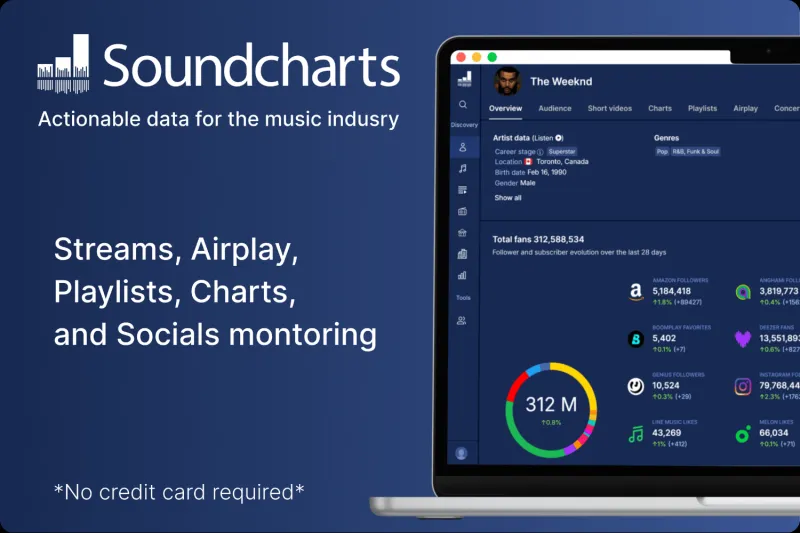
Photo: data analyst music streaming platform laptop charts headphones, via soundcharts.com
There's a version of music discovery that feels magical — you're scrolling through Discover Weekly on a Tuesday afternoon, and suddenly some artist you've never heard of is soundtracking your entire commute. You save three songs, follow the profile, and within a week you're telling your friends you found them first.
What you probably don't know is that, for a growing number of artists, that moment wasn't an accident.
Behind the curtain of Spotify's recommendation ecosystem, a loose network of music strategists, data analysts, and platform-native consultants have spent years reverse-engineering how the algorithm decides who surfaces and who stays buried. They're not hackers in any illegal sense. They're students of the system — obsessive, methodical, and increasingly in demand.
The Playlist Nobody Pitches To
Most artists know about editorial playlists — the human-curated lists like RapCaviar or Today's Top Hits that require formal pitching through Spotify for Artists. Landing one of those is a career moment. But editorial placements are rare, competitive, and largely inaccessible to emerging acts without label backing.
Algorithmic playlists are a different animal entirely. Discover Weekly, Release Radar, Radio — these are generated entirely by machine learning models that analyze listening behavior, audio features, and metadata relationships. Nobody at Spotify is manually choosing who gets slotted in. That means there's no inbox to pitch, no curator to charm. There's only the system.
And the system, it turns out, can be studied.
"The algorithm isn't magic — it's pattern recognition," says one independent music strategist based in Los Angeles who asked to be identified only by his consulting alias. "Once you understand what patterns it's recognizing, you can start making intentional decisions that align with those patterns. That's not gaming anything. That's just being smart."
Signals, Metadata, and the First 72 Hours
The strategists we spoke with describe a layered approach to algorithmic optimization that starts long before a song even drops. Metadata — the genre tags, mood descriptors, language classifications, and release information attached to a track — acts as the algorithm's first impression. Get it wrong, or leave it incomplete, and the system misfires, serving your indie bedroom pop to listeners who only stream death metal.
But metadata is just the foundation. The real leverage point, according to multiple sources, is what happens in the first 72 hours after release.
"Spotify's system is watching early listener behavior incredibly closely," explains one data analyst who works with mid-tier independent labels. "Save rate, playlist add rate, skip rate, completion rate — all of that gets processed fast. If early listeners are saving the track and completing it, the algorithm reads that as quality signal and starts serving it wider. If people are skipping at the 20-second mark, it pulls back."
This has led to an entire sub-strategy around what some in the community call "seeding" — carefully routing a new release to small but hyper-engaged listener communities before the wider push, essentially manufacturing a strong early signal to trigger algorithmic momentum.
Playlist Curators as Kingmakers
Here's where it gets complicated. Independent playlist curators — regular people who've built large Spotify followings around niche genres — have become critical infrastructure in this ecosystem. Getting placed on a playlist with 50,000 followers in the right micro-genre can generate enough streams and saves to trip Spotify's discovery algorithms into action.
Some curators operate entirely above board, accepting submissions through platforms like SubmitHub and making genuine editorial choices. Others exist in grayer territory, and the line between "promotion" and "artificial inflation" has been the subject of ongoing debate — and occasional Spotify enforcement action.
"I've had artists come to me after paying for playlist placements that got their accounts flagged," says one independent curator who runs several genre-specific playlists with a combined following north of 200,000. "The difference between legitimate playlist promo and manipulation is whether real humans are actually listening. Bots don't save songs. Bots don't add tracks to their own playlists. The algorithm knows."
Spotify has been increasingly aggressive about removing what it terms "artificial streaming activity," but the strategists who operate in the optimization space argue their work doesn't cross that line. The goal isn't fake plays — it's real listener targeting done with unusual precision.
The Artists Who've Cracked It
Without naming names (several artists we reached out to declined to go on record for fear of Spotify scrutiny), the pattern among acts who've successfully used these methods is consistent: they tend to be independent, data-literate, and willing to treat their release strategy with the same rigor they apply to the music itself.
One Nashville-based singer-songwriter described spending three months before her debut EP release studying the audio feature profiles of songs that performed well on algorithmic playlists in her target genre — analyzing tempo, key, loudness, and even the specific sonic textures that appeared repeatedly among algorithmically favored tracks.
"I wasn't changing my sound to fit a formula," she told us. "I was making sure the sound I already had was being communicated correctly to the system. It's like SEO for music. You're not writing worse articles — you're just making sure Google can read them."
Her EP landed on Discover Weekly for a significant chunk of her now-substantial listener base within two weeks of release. She's since signed a distribution deal and has a booking agent.
Gaming the System or Mastering the Medium?
The philosophical debate at the center of all this is one the music industry hasn't fully resolved. Spotify's algorithm was designed to surface music that listeners genuinely love. When artists engineer their way into that system, are they corrupting the discovery experience — or are they just doing what every generation of artists has done, which is learn the rules of the medium they're working in?
The curators and strategists we spoke with mostly land on the latter view, though they acknowledge the ecosystem has real failure modes. When optimization becomes the primary goal, artistry can suffer. When every emerging artist is playing the same metadata game, the algorithmic playlists can start to feel homogenized — a feedback loop that rewards conformity over genuine innovation.
For the fans who stumble onto something real through Discover Weekly, the hope is that what the algorithm serves them was earned honestly. For the artists who've learned to speak its language, the argument is simple: in a world of 100,000 new tracks uploaded to Spotify every single day, the alternative to understanding the system is invisibility.
The reveal is in knowing how to be found.