Coded for Clout: The Artists Engineering Their Own Viral Moments With Data
The Waiting Game Is Over
There's a version of the music career origin story that still gets told a lot — the one where an artist drops something into the void and wakes up to a million streams, a flooded inbox, and a new life. The overnight success myth. It's a good story. It's also, increasingly, not how it actually happens.
Behind a growing number of so-called organic breakouts is something far more calculated: a small but intensely focused community of musicians, indie managers, and DIY strategists who treat the streaming ecosystem less like a lottery and more like a puzzle with a solvable pattern. They call themselves different things — growth hackers, music marketers, data nerds — but the function is the same. They're reverse-engineering virality before it happens.
And they're getting very good at it.
The Toolkit Nobody Talks About
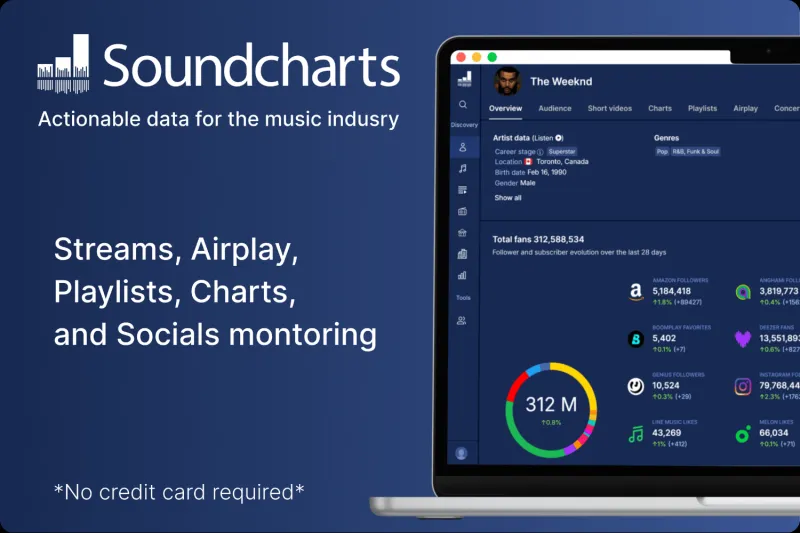
Ask anyone in this world what they're working with and the list comes fast. Chartmetric. Soundcharts. Spotify for Artists. TikTok's own analytics dashboard. Google Trends. Even Reddit thread velocity. The tools themselves aren't secret — most are accessible to any independent artist willing to pay a modest monthly fee. What separates the data crowd from everyone else is how obsessively they cross-reference them.
"I'm looking at what's growing in pre-save rates in specific playlist genres, what sounds are getting added to user-generated playlists organically, and what the average skip rate is on records that have a similar tempo to mine," says one independent artist manager based in Atlanta who asked to stay anonymous. "By the time I'm pitching a release, I've already mapped out a six-week window where the conditions are statistically favorable."
That kind of language — statistically favorable — would have sounded absurd in a music industry conversation ten years ago. Now it's almost mundane among the people doing it.
The timing piece is particularly significant. This community has started treating release windows the way stock traders treat market conditions. Holiday weekends, awards show cycles, even the days of the week that Spotify's editorial team is most likely to be reviewing new pitches — all of it gets factored in. One producer from Chicago described building a release calendar that deliberately avoided dropping anything within two weeks of a major label priority release in the same genre. "Why fight for editorial attention when you can have the room to yourself?"
Manufacturing 'Organic' — and the Ethics of It
Here's where things get complicated. There's a meaningful difference between strategic timing and outright manipulation, and the line between them is blurrier than the industry likes to admit.
Legitimate data strategy — understanding your audience, timing your content, optimizing your metadata — is essentially just smart marketing. Nobody blinks at a brand A/B testing ad copy. But some corners of this world push further: coordinated streaming from fan networks, engagement pods on TikTok, bulk saves timed to game Spotify's algorithmic triggers. That stuff exists, and the people doing clean data work are often frustrated by the association.
"There's a whole spectrum," says one music tech consultant who works with indie labels. "On one end, you've got an artist who studies when her core audience is most active and drops content accordingly. On the other end, you've got someone gaming play counts with fake streams. Those are not the same thing, but they get lumped together all the time."
Spotify and other platforms have gotten more aggressive about detecting artificial behavior, which has pushed the more sophisticated players toward genuinely audience-centric strategies. The argument they make — and it's not a bad one — is that understanding your listeners deeply enough to meet them where they are isn't manipulation. It's just not being lazy.
The Artists Who Cracked It
The success stories in this space tend to follow a recognizable shape. An independent artist, usually without major label infrastructure, builds a small but hyper-engaged following in a specific niche. They study that niche obsessively — what playlists are feeding it, what creators are amplifying it on short-form video, what the sonic fingerprint of the moment is. Then they engineer a release that hits every one of those data points at the right time.
Take the wave of bedroom pop and lo-fi soul artists who broke through in 2022 and 2023. Several of them have since talked openly about how precisely they timed their TikTok rollouts to coincide with trending audio formats — not by chasing trends, but by identifying micro-trends about three to four weeks before they peaked. "By the time something is trending, you've already missed it," as one artist put it in a YouTube video that itself racked up a couple hundred thousand views. "You want to be in the wave before it breaks."
That kind of lead time — identifying a cultural moment before it registers to the casual observer — is the whole game. And the artists who've done it successfully are increasingly sharing their methods, building newsletters, Discord communities, and paid courses around the methodology. The knowledge is democratizing fast.
What This Means for Music Discovery
For fans, there's something worth sitting with here. The tracks that end up in your Discover Weekly or on your For You page didn't necessarily get there because they were the most authentic or the most artistically adventurous. Some of them got there because someone did their homework.
But that framing might be too cynical. Great music and great strategy aren't mutually exclusive. The artists who seem to be winning long-term with this approach aren't making algorithmic slop — they're making music they believe in and then being ruthlessly intelligent about how it gets heard. The craft still has to be there. Data can get a song in front of ears. It can't make someone care.
What's shifting is the definition of the independent artist hustle. It used to mean booking your own shows and printing your own merch. Now it also means spending Sunday night deep in a Chartmetric dashboard, looking for the gap in the market that nobody else has spotted yet.
The algorithm isn't going anywhere. These artists have decided the smartest move is to learn its language.