Sound by Design: The Artists Building Viral TikTok Hits Like Software
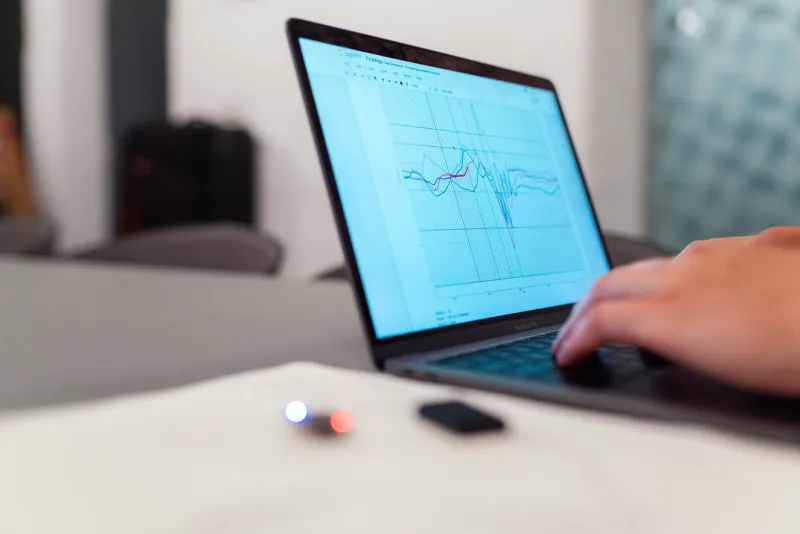
Somewhere in a home studio in Atlanta, a 24-year-old producer named Dez is staring at a spreadsheet that has nothing to do with money. It tracks BPM ranges, hook entry points, vocal saturation levels, and the average frequency at which trending TikTok sounds peak in the 2–4kHz range. He calls it his "cheat sheet." The algorithm, he says, calls it dinner.
"I stopped making music I liked and started making music that fits," Dez tells us over a voice note. "Not forever. Just long enough to get ears on me."
Dez is part of a quietly growing movement — independent artists and producers who are approaching TikTok virality less like a lottery and more like an engineering problem. They're dissecting what makes sounds spread, building frameworks around their findings, and then composing tracks that fit those specs with surgical precision. Some of them are blowing up. Some of them are losing their minds. Most of them are doing both.
The Anatomy of a Trend
To understand what these artists are actually doing, you have to understand what TikTok's sound ecosystem actually rewards. It's not just catchy. Catchy is table stakes.
The artists cracking the code are going deeper — studying which vocal textures cut through phone speakers, how much reverb triggers an emotional response without muddying a hook, where exactly in a track the most-looped section tends to live (usually between the 7- and 14-second mark), and what tempo ranges sync naturally with the platform's most-used video formats.
Producer and independent artist Maya Solís, based out of Los Angeles, spent six months cataloguing sounds that hit over 500,000 video uses on TikTok before she wrote a single note of her current project. "I wasn't copying songs," she's quick to clarify. "I was looking for patterns. There's a difference between stealing a painting and studying why people stop in front of it."
What she found surprised her. Tempo mattered less than texture. Tracks with lo-fi grain, subtle pitch modulation on the lead vocal, and a hook that started on the downbeat rather than building to it consistently outperformed cleaner, more traditionally polished productions. "The algorithm doesn't care about your mixing engineer," she says, laughing. "It cares about whether someone can hum it back in three seconds."
The Toolkit
These artists aren't working blind. A growing suite of tools — some purpose-built, some repurposed from other industries — is feeding their process. Platforms like Chartmetric and Soundcharts let them track trending audio data in near real-time. Some are using AI-assisted composition tools to prototype hooks rapidly, testing multiple variations before committing to a direction. A few are even running informal A/B tests, posting different versions of the same sonic concept as background audio to throwaway accounts before attaching their name to anything.
It sounds clinical because it is. And that's exactly what bothers people.
"There's a version of this that's just smart strategy," says Brooklyn-based music consultant and former label A&R Terrence Okafor. "And there's a version that's producing content, not music. The line between those two things is getting real blurry, real fast."
Okafor isn't dismissing the artists doing this work — he's wary of what the incentive structure is training them toward. "If every decision you make is filtered through 'will this trend,' you're not developing an artistic instinct. You're developing a platform instinct. Those aren't the same thing, and one of them has a much shorter shelf life."
When It Works — and What It Costs
For some artists, the approach has delivered results that are hard to argue with. Dez's last release, a track he built specifically around a tempo and vocal chop style he'd identified as underserved in TikTok's R&B-adjacent lane, pulled 1.2 million video uses within three weeks of release. He used the momentum to book his first real run of shows and land a sync placement conversation he'd been trying to have for two years.
"Did I make the song I would've made if nobody was watching? No," he admits. "But nobody was watching before. So."
Maya Solís tells a more complicated story. Her engineered track performed exactly as she projected — strong hook adoption, solid video use numbers, a meaningful spike in her Spotify monthly listeners. But when she went to make the follow-up, she found herself second-guessing every creative instinct through the lens of her own framework. "I built a cage and then I had to figure out how to write inside it," she says. "That was a weird place to be."
She's still figuring it out. Her current approach is what she calls "hybrid" — using data to inform structure while deliberately leaving space for choices that don't have a metric attached to them. "I'll engineer the entry point. The rest has to be real or it sounds like nothing."
The Homogenization Question
The concern that gets raised most often in these conversations isn't about any one artist. It's about what happens when enough artists are all running the same playbook.
If dozens of independent producers are all targeting the same tempo windows, the same hook placement zones, the same vocal processing signatures — what does TikTok's sound landscape start to look like? And more importantly, what does it start to sound like?
"We're already seeing micro-genre collapse," says Okafor. "Sounds that used to have distinct identities are blurring together because everyone's optimizing for the same two minutes of attention. The platform is essentially selecting for a monoculture and calling it discovery."
It's a fair critique, and it doesn't have an easy answer. TikTok's algorithm rewards pattern recognition — both in its users and, apparently, in its creators. The artists gaming it are responding rationally to the incentives in front of them. Whether those incentives are good for music as a living, evolving thing is a separate question entirely.
The Reveal in the Data
What's genuinely interesting about this moment — and what makes it worth paying attention to — is that these artists are doing something the music industry has always done, just with better tools and without a label's budget behind them.
Every pop songwriter who ever got a note back from an A&R saying "the hook needs to hit sooner" was operating inside a version of this same logic. The difference is transparency. These artists aren't pretending the strategy doesn't exist. They're building the strategy themselves, in public, and being honest about what it costs them.
Dez, for his part, sounds more clear-eyed than conflicted. "The data got me in the room," he says. "What I do in the room is still mine."
Maybe that's the balance. Maybe it isn't. But the artists finding ways to hold both — the formula and the feeling — are the ones worth watching. The ones who let the spreadsheet make all the calls? You'll hear them for about a week and then forget their names entirely.
And the algorithm, for all its pattern-matching genius, hasn't figured out how to fix that yet.