Watch Time Is the New Hit: The Artists Cracking YouTube's Hidden Playbook
Somewhere between a beat drop and a machine learning model, a new kind of music career is being built. It doesn't start with a label showcase or a sync placement. It starts with a spreadsheet, a heatmap, and a very specific theory about how long a viewer will sit through an intro before bouncing.
Welcome to the world of the algorithm whisperers — independent artists and producers who've quietly turned YouTube's recommendation engine into their personal radio station. And they're not asking for airplay. They're engineering it.
The Click Is Just the Beginning
Most people still think going viral on YouTube is about the video itself. Make something wild, get lucky, watch the numbers climb. But the artists who've actually cracked consistent growth on the platform will tell you the click is almost irrelevant. What matters is what happens after.
YouTube's recommendation system isn't just tracking views — it's obsessing over session time. The platform wants users to stay on YouTube, not just on your video. So the algorithm rewards creators whose content pulls viewers into longer sessions, either by keeping them on one video or by funneling them to the next one. That distinction has completely changed how a growing number of artists think about releasing music on the platform.
"The thumbnail gets them in the door," says one independent producer from Atlanta who asked to stay anonymous. "But the first 30 seconds of the video decides whether YouTube ever shows it to anyone again."
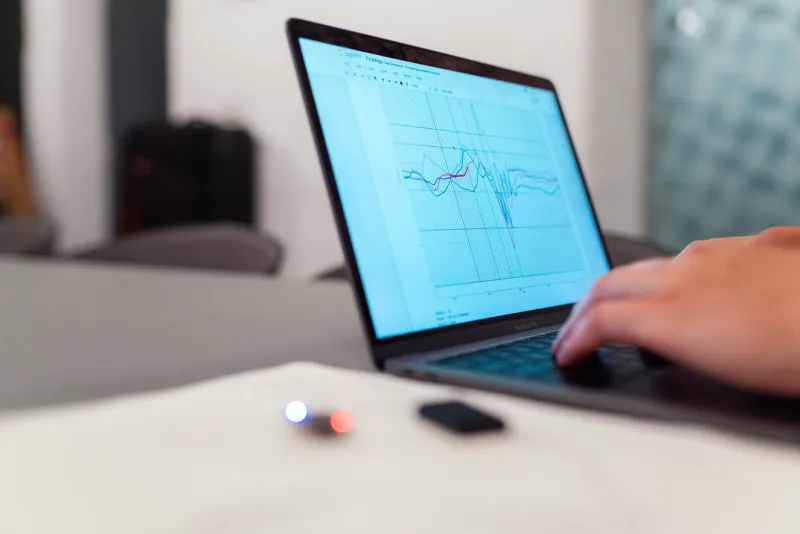
He's spent the last three years studying retention graphs — the jagged little lines in YouTube Studio that show exactly when viewers tune out. He builds his beats around those graphs now. Drops timed to re-engage at the 45-second cliff. Visual cuts synced to attention spikes. Even silence used strategically to reset a viewer's focus before a hook.
Thumbnail Psychology Is a Whole Field Now
Before any of that retention science kicks in, someone has to click. And the underground has gotten deeply weird about thumbnails.
There are private Discord servers — some with thousands of members — where artists and producers share A/B test results on thumbnail designs with the same energy that growth hackers trade landing page data. High contrast versus muted tones. Eyes looking directly at the camera versus a three-quarter profile. The color red appearing somewhere in the first visual third of the frame. These aren't random preferences. They're conclusions drawn from thousands of data points across hundreds of channels.
One producer from Chicago who goes by Drel online has built a following of nearly 400,000 subscribers on a channel that posts nothing but lo-fi instrumentals. He credits almost none of it to the music itself — or at least, he's careful to separate the quality of the music from the mechanics of its distribution.
"I make good music, I think," he told Reveals over DM. "But I also know that I tested eleven thumbnail styles before I found the one that doubled my click-through rate. That's not art. That's just paying attention."
Drel now consults informally with other beatmakers trying to build YouTube presences, walking them through what he calls "the three-second test" — whether a thumbnail communicates a clear emotional signal before a viewer's brain has consciously processed it.
Suggested Video Placement Is the Real Prize
Here's what most casual observers miss about YouTube success: the homepage algorithm and the suggested video sidebar are two completely different beasts. Artists who've studied the platform seriously will tell you that suggested placement — appearing in the right-hand column while someone watches a bigger artist's video — is worth more than almost any other traffic source.
Getting there requires a specific kind of metadata hygiene that borders on obsessive. Tags, titles, and descriptions that semantically cluster your content near established artists in your genre. Upload schedules timed to when your target audience is most active. Video lengths calibrated to match the average session behavior of viewers who watch similar content.
One bedroom pop artist from Portland, who's built a genuinely impressive 200K subscriber channel without a single major press placement, described her process as "competitive SEO for vibes." She maps out which established artists in her genre have high watch times but lower-than-expected subscriber counts — a signal that their audience is hungry for more content than they're producing. Then she positions her releases to fill that gap in the suggested feed.
"It sounds cold," she admits. "But I'm not manipulating anyone. I'm just making sure people who would actually like my music can find it."
When the Machine Learns You Back
There's a strange loop that develops once you've been doing this long enough. The algorithm starts to learn you — your audience's behavior, their watch patterns, the times they're most likely to engage. And if you've built that audience strategically, the machine starts working harder on your behalf without you having to push as hard.
This is what the algorithm whisperers are really chasing: the point where the system becomes self-reinforcing. Where a new upload gets a faster initial push because YouTube has built a confident model of who watches your stuff and when.
But it comes with a trap. Several artists in these communities have described what happens when they try to evolve their sound or visual style — the algorithm essentially punishes them for confusing its model. New music that doesn't fit the established pattern gets depressed in recommendations, sometimes dramatically. The machine that made you can also keep you frozen.
"I spent two years building a channel around one aesthetic," one producer told Reveals. "When I tried to switch directions, I lost 40% of my recommendation traffic in a month. The algorithm didn't know what to do with me anymore."
Talent Isn't Dead — But It Needs a Strategy
The easy cynical read on all of this is that music is being replaced by content optimization. That the artists winning on YouTube are just better at data science than they are at songwriting. But spend any real time in these communities and that framing falls apart pretty quickly.
The artists who've found the most sustainable success aren't the ones who gamed the algorithm once and cashed out. They're the ones who used algorithmic understanding to get their music in front of an audience that genuinely connected with it — and then let the actual music do the work of keeping people around.
The algorithm whisperers aren't trying to replace talent. They're trying to make sure talent doesn't disappear into the void before anyone gets a chance to hear it. On a platform where a billion videos are competing for the same eyeballs, that's not gaming the system. That's just survival.
And honestly? The artists who refuse to learn any of this aren't more authentic. They're just harder to find.
