Self-Taught and Streaming: The Independent Artists Writing Code to Hack Their Own Discovery
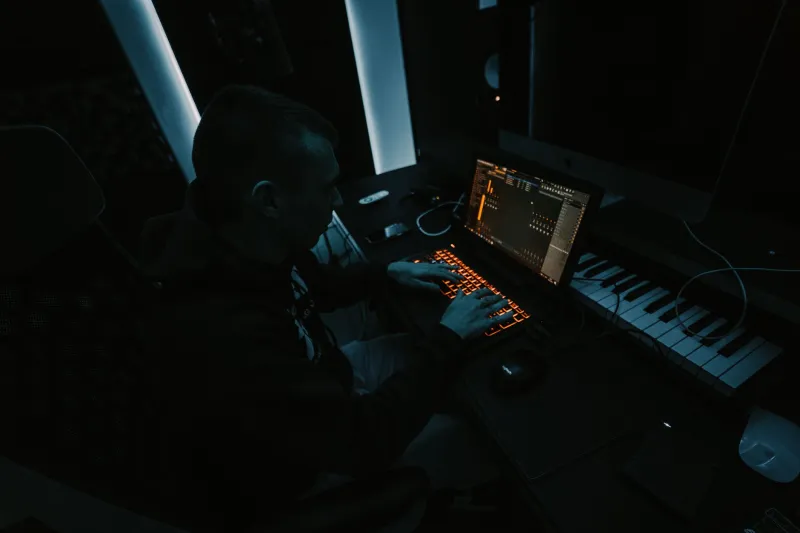
There's a scene playing out in bedroom studios and studio apartments across the country that looks less like music-making and more like a software sprint. An artist finishes a track, exports the file, and then opens a second laptop — one with a code editor running. They're not mixing. They're not mastering. They're querying the Spotify API to figure out exactly which playlists their last single landed adjacent to, and why.
This is the new DIY. And it's a lot more technical than anyone expected.
When the Algorithm Became the Gatekeeper
For most of the streaming era, independent artists operated under a fairly helpless assumption: the algorithm was a black box, and unless you had label infrastructure pushing your numbers up, you were basically invisible to it. Playlist pitching existed, but it was slow and hit-or-miss. DSP editorial teams were approachable only if you had the right connections. Discovery felt like luck dressed up as strategy.
That started shifting around 2021, when the developer documentation for platforms like Spotify and Apple Music became more accessible, and hobbyist coding communities started treating music discovery like an engineering problem. Artists who happened to have a background in tech — or who were just stubborn enough to learn — began pulling back the curtain on how recommendation systems actually behaved.
What they found wasn't magic. It was math. And math, unlike industry relationships, is learnable.
The Toolkit Nobody's Talking About
Ask Marcus, a 26-year-old producer and vocalist out of Atlanta who releases music under the name Sero Null, what his release process looks like, and he'll describe something that sounds closer to a product launch than a traditional rollout.
"I built a small dashboard that pulls listener data from Spotify for Artists and cross-references it with public playlist data," he says. "I can see which editorial-adjacent playlists my songs are appearing in, what the listener profiles look like in different cities, and roughly how long it takes for the algorithm to start pushing a track after a certain engagement threshold."
Sero Null uses that data to time his release cadence — not based on gut instinct or label advice, but based on observed patterns in his own catalog's performance. He's not manipulating streams or doing anything that violates platform terms of service. He's just reading the room better than most.
He's not alone. Across Reddit threads in communities like r/WeAreTheMusicMakers and in private Discord servers, artists are sharing Python scripts, spreadsheet templates, and API workflows designed to reverse-engineer how their music moves through recommendation systems. The barrier to entry has dropped dramatically. You don't need a computer science degree. You need about three weeks on YouTube and a reason to care.
Playlists Are the Breadcrumbs
One of the most commonly discussed strategies in these communities involves what some artists call "playlist adjacency mapping." The idea is straightforward: when your song gets added to a user-generated or algorithmic playlist, that placement tells you something about how the platform is categorizing your sound. By tracking which playlists you appear next to — and who else is on those playlists — you can start to understand the sonic and demographic neighborhood your music has been assigned to.
That information is genuinely useful. If you're a left-field R&B artist and the algorithm keeps placing you next to indie folk acts, something about your metadata, tempo, or instrumentation is sending the wrong signal. Artists who understand this can adjust — not by changing their sound, but by tweaking how they describe and tag their releases, or by shifting the context of their promotional activity to better match the audience they actually want.
Jordan Fells, a Chicago-based artist who makes what she describes as "future soul," spent three months tracking her playlist placements before she released her most recent EP. "I noticed that my earlier stuff kept getting pulled into chill study playlists rather than the more intentional listening spaces I wanted to be in," she says. "So I changed some things about how I was pitching the music — the mood descriptors, the tempo range I was targeting — and the next project landed in completely different company. Better company, for what I was trying to do."
The Ethical Gray Zone
Not everything happening in these communities is as clean as data analysis and smart metadata strategy. Some of the tactics circulating in more underground corners of the internet push closer to manipulation — coordinated streaming behavior designed to trigger algorithmic signals, fake engagement farms, playlist trading schemes that create the illusion of organic discovery.
Most serious artists draw a hard line there. The platforms are getting better at detecting artificial activity, and the consequences — shadowbanning, removal from algorithmic recommendations, account suspension — are severe enough to outweigh any short-term bump. But the gray areas are real, and the line between smart strategy and gaming the system isn't always obvious.
What's interesting is that the artists most engaged in this space tend to be the most principled about it. They're not trying to fake their way to success. They're trying to understand the rules well enough to play by them more effectively than the artists who are just guessing.
"The labels have had this information for years," says Sero Null. "They have whole teams that do nothing but analyze streaming patterns. All I'm doing is trying to access the same knowledge with the tools that are publicly available. That's not cheating. That's just catching up."
What This Means for the Discovery Ecosystem
Zoom out, and what you're watching is a quiet power shift in how music gets found. The traditional model — make music, sign a deal, let the label's infrastructure do the heavy lifting — is being challenged not just by social media virality, but by a generation of artists who are willing to learn technical skills in service of their careers.
That's a genuinely new development. And it has implications for how labels, DSPs, and the broader industry think about what "independent" actually means. An artist who understands their own data, can read algorithmic signals, and knows how to build a discovery pipeline without institutional support isn't just independent in the old sense of the word. They're operating with a level of strategic sophistication that used to require a full team.
It doesn't mean the playing field is level. Resources, time, and access still matter. An artist working two jobs doesn't have the same bandwidth to learn Python as someone with more flexibility. But the gap is closing in ways that would have seemed unlikely five years ago.
The Reveal Hiding in Plain Sight
The most striking thing about this movement isn't the technology. It's the mindset. These are artists who decided that understanding the system was part of their job — not a distraction from the music, but an extension of the same creative problem-solving that goes into making it.
The algorithm isn't going anywhere. Neither are the gatekeepers, exactly. But for the artists willing to learn how the machinery actually works, the door is open in ways it never used to be. You just have to be the kind of person who reads the documentation.