Blueprint Thieves: Inside the New Wave of Artists Dissecting Chart Hits to Crack the Streaming Code
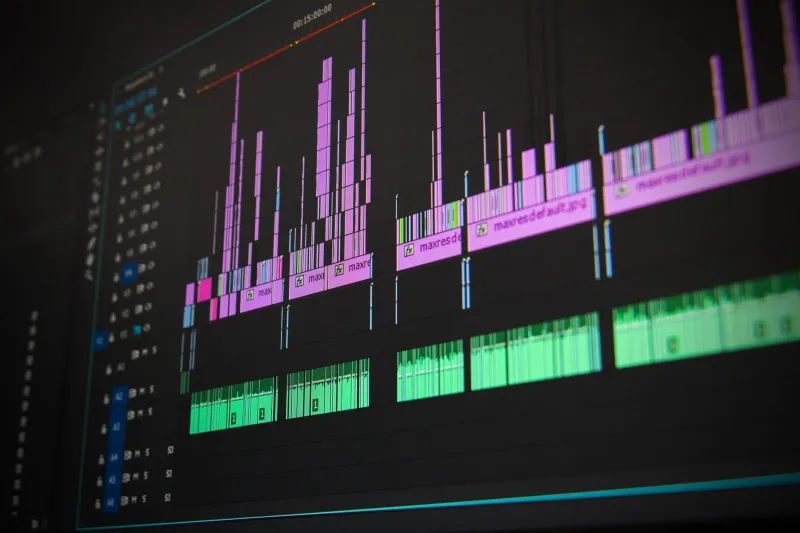
There's a producer in Atlanta who spends every Sunday morning doing what he calls "autopsies." He pulls apart the week's biggest streaming records — not to sample them, not to replay them — but to understand precisely why they worked. He maps the frequency spectrum. He clocks the exact moment the drop hits relative to the song's runtime. He notes where the vocal sits in the mix, what reverb tail is trailing the snare, how many bars pass before the hook returns. By noon, he has a spreadsheet. By Monday, he's building something new.
He's not alone. Across bedroom studios and professional suites from LA to Brooklyn, a quiet but growing movement of artists and producers is using AI-assisted audio analysis tools — think Soundful, LANDR's analysis suite, Musicstax, and a handful of custom-built Python scripts shared in private Discord channels — to reverse-engineer commercial success with almost clinical precision. The goal isn't plagiarism. The goal is pattern recognition.
And depending on who you ask, it's either the most exciting democratization of hit-making in a generation, or the beginning of the end for authentic pop music.
The Anatomy of a Hit
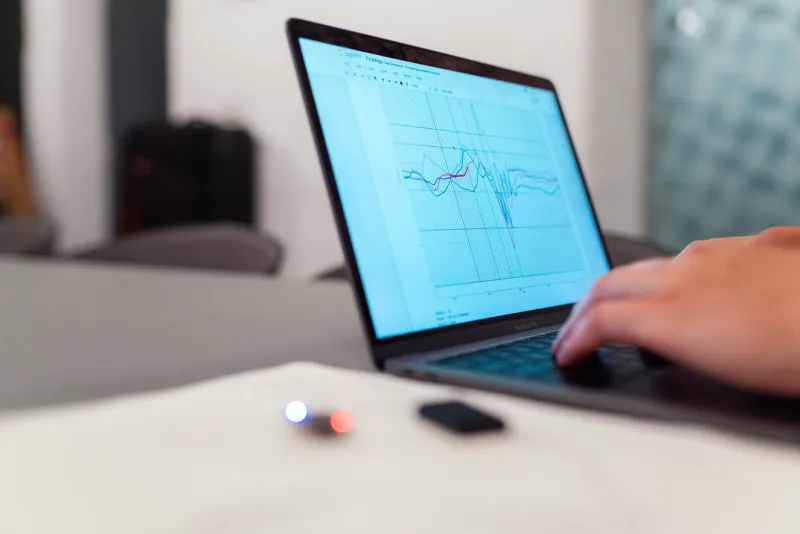
To understand what these artists are actually doing, you need to understand what the tools can see. Modern audio analysis software can isolate everything from a track's dynamic range and tempo to the specific frequency bands where the vocal sits, the average loudness level across the mix, and the structural architecture of the song itself — verse length, pre-chorus presence, how quickly the first hook arrives.
Tools like Musicstax let you punch in any track and pull back a data profile showing BPM, key, energy, danceability, and valence scores — essentially the same metadata Spotify's algorithm uses to categorize and recommend music. Meanwhile, more advanced platforms use machine learning to identify micro-trends across thousands of songs simultaneously, flagging things like: tracks in this BPM range with this vocal register are currently outperforming in the 18-24 demo on Friday release cycles.
For independent artists without label infrastructure or A&R guidance, this kind of intelligence used to be completely inaccessible. Now it's a $20-a-month subscription.
"I think of it like studying film," says one indie pop artist based in Chicago who asked to remain anonymous while her debut project is still in development. "Directors watch other directors' movies frame by frame. Why wouldn't I listen to a Sabrina Carpenter record and try to understand exactly why that pre-chorus hits the way it does? That's just craft."
Where Craft Ends and Copying Begins
The tension in this conversation is real, and the artists engaged in it know it. There's a meaningful difference between studying the structural logic of a hit and trying to replicate its emotional DNA — and not everyone threading that needle is landing on the right side of it.
Producers who've been in the game long enough have seen versions of this before. The early 2010s saw a wave of "loudness wars" tracks engineered to max out streaming normalization. A few years later, the lo-fi hip-hop explosion spawned hundreds of near-identical bedroom beats chasing the same Spotify playlist placement. Each time, the algorithm rewarded early movers and punished the followers.
"The problem with purely data-driven songwriting is that the data is always lagging," says a Nashville-based producer who has credits on multiple top-40 records and now consults with independent artists. "By the time you've analyzed why a song is charting, the culture has already moved. You're building a time machine that only goes backward."
That's the core paradox. The tools are genuinely powerful, but they're trained on what already worked — not what's about to. And in a streaming environment where novelty and emotional authenticity still drive massive organic discovery moments, chasing yesterday's blueprint can leave artists sounding like competent cover bands of their own influences.
The Smarter Play
The artists getting the most out of these tools seem to be the ones using them as a starting point rather than a finish line. Rather than asking "how do I make something that sounds like this hit," they're asking more surgical questions: Why does this chord change feel so satisfying? What's the average gap between hook repetitions on tracks that get heavy playlist adds? Is there a tempo range that's currently underserved in a genre I already work in?
That reframe matters. It shifts the tool from a copy machine to a compass.
One Brooklyn-based R&B producer described running his own demos through analysis software alongside reference tracks — not to match them, but to identify where his instincts were diverging from commercial norms and then decide intentionally whether that divergence was a feature or a flaw. "Sometimes I hear that my low end is sitting way lower than anything on the chart right now, and I think, okay, maybe I should address that. Other times I look at it and go — that's actually my thing. That's what makes it mine."
That kind of self-awareness is what separates the artists using these tools thoughtfully from the ones just running a recipe.
What the Algorithm Actually Wants
Here's the uncomfortable truth that sits underneath all of this: Spotify, Apple Music, and every other major streaming platform are themselves running versions of this exact analysis constantly. Their recommendation engines are pattern-matching machines. They reward consistency, completion rates, saves, and playlist adds. In a very real sense, the artists trying to reverse-engineer hits are just trying to speak the algorithm's language fluently.
And that's not entirely cynical. If independent artists can use publicly available tools to compete with the production resources of major label signees — to make records that get surfaced and heard by real listeners who genuinely connect with them — that's a net positive for music discovery. The playing field has never been level. These tools tilt it slightly back toward the independent.
But the artists who are actually breaking through right now — the ones getting the Spotify editorial placements, the TikTok-to-chart pipeline moments, the genuine cultural traction — aren't the ones who sound the most like a data model. They're the ones who sound the most like themselves, just packaged in a way the algorithm can process.
The blueprint is a tool. The soul is still on you.
The Reveal
What this whole movement is really exposing is that the gap between "understanding how hits work" and "making one" is still enormous — and it lives entirely in the human part of the process. The artists running these autopsies on Sunday mornings aren't becoming robots. The smart ones are becoming more informed versions of themselves.
They're learning the rules well enough to know exactly which ones are worth breaking. And in 2025, that might be the most valuable skill in music.