Pulled From the Playlist: The Mysterious Momentum Killer Nobody in Streaming Will Talk About
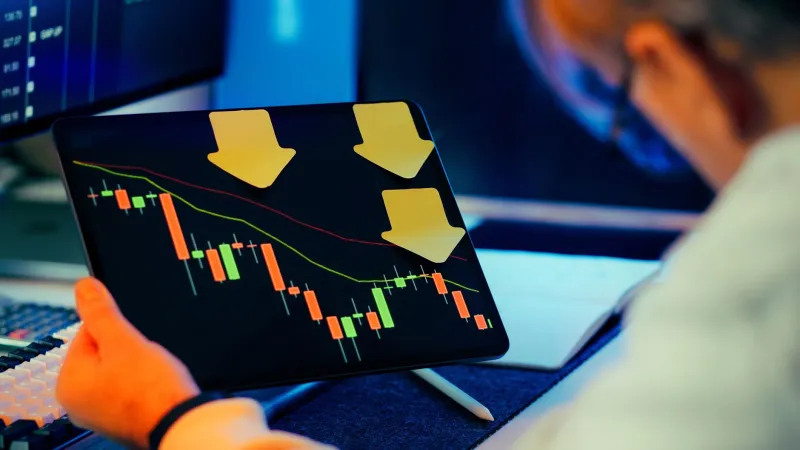
There's a specific kind of silence that follows a good week on the charts. You've watched your numbers climb. Playlist editors have noticed. The saves are stacking up and the algorithm seems — finally — to be working in your favor. Then, without a single notification or explanation, it stops. The streams flatline. The playlist placements disappear. And the song that was building toward something real just... doesn't anymore.
This isn't an isolated story. It's happening to emerging artists across the country, and the pattern is consistent enough that producers, managers, and data analysts have started calling it something: the ghost drop.
The Drop Nobody Can Explain
Take Atlanta-based producer and vocalist Dre Okafor, who released a single last spring that landed on three mid-tier Spotify editorial playlists within its first two weeks. His saves-to-streams ratio — a metric closely watched by indie artists as a signal of genuine listener investment — was climbing steadily. Then, around day 19, the playlists stopped showing his track. No email. No dashboard alert. Just a slow bleed that took his daily streams from roughly 12,000 back down to under 400 in less than a week.
"I thought it was a glitch," Okafor told us. "I checked everything. My distributor couldn't tell me anything. Spotify for Artists just showed the numbers going down. Nobody had an answer."
His experience isn't unique. We spoke with six other independent artists across pop, R&B, and indie electronic who described near-identical situations — organic growth interrupted mid-momentum, playlist slots evaporating without cause, and a total absence of communication from the platforms hosting their music.
What the Data Actually Shows
Streaming analysts who work with indie labels and DIY artists say the pattern is real, even if the cause is still debated. Marcus Thiel, who runs a boutique music analytics consultancy out of Chicago, has been tracking playlist rotation cycles for the better part of three years. His data suggests that editorial playlists on major platforms rotate tracks on a schedule that has very little to do with how a song is performing.
"The assumption artists make is that if a song keeps growing, it stays," Thiel explained. "But editorial playlists have a refresh cadence. Slots turn over. And when a new track from a bigger artist or a priority release comes in, something has to move out — regardless of where the smaller track is trending."
That rotation logic, Thiel argues, creates an artificial ceiling for emerging artists. A song might have weeks of genuine momentum left in it, but the playlist infrastructure isn't designed to let it run. It's designed to keep the playlist feeling current.
The more unsettling theory — one Thiel is careful to call speculative — is that algorithmic personalization may actually suppress tracks once they've saturated their initial listener pool. "The system identifies who's most likely to enjoy a song and serves it to them first. Once that audience is reached, engagement rates can drop — not because the song got worse, but because it's running out of easy targets. And the algorithm reads falling engagement as a signal to pump the brakes."
The Throttle Question
The word "throttling" gets thrown around a lot in indie music communities, and it tends to land somewhere between conspiracy theory and industry open secret. The idea is that platforms deliberately slow down track discovery once a song reaches a certain momentum threshold — either to create space for new releases, protect relationships with major labels, or simply to keep the content cycle moving.
None of the major platforms have publicly acknowledged any such practice, and Spotify, Apple Music, and Amazon Music did not respond to requests for comment for this article.
But the suspicion persists, partly because the behavior is so consistent. Artists in entirely different genres, on different distributors, in different US markets, describe the same arc: early traction, accelerating numbers, then a hard stop that coincides with no external event they can identify.
Los Angeles-based indie pop artist Simone Varga, whose single "Paper Orbit" was pulling solid numbers on algorithmic playlists like Discover Weekly before its sudden decline, put it bluntly: "It feels like the platform decides when your moment is over before you do. And you have no recourse. You can't appeal it. You can't even confirm it happened."
What Artists Are Actually Doing About It
Faced with a system they can't fully see or control, some artists are building strategies specifically designed to survive the ghost drop. The core logic: don't let the platform be your only source of momentum.
Okafor, after his spring setback, spent the following months rebuilding his release strategy around off-platform engagement. He pushed his audience toward his email list and Discord before his next drop, aiming to have a base of listeners who would engage with the song independent of whether an algorithm served it to them.
"If the playlist pulls you, you need somewhere else to land," he said. "I learned that the hard way."
Other artists are timing their promotional pushes to hit hardest in the first ten days of a release — the window they believe is most likely to result in editorial consideration — and front-loading their social content to generate external traffic that feeds back into the algorithm rather than waiting for the algorithm to do the work.
Thiel recommends that artists and their teams watch save rates and skip rates more closely than raw stream counts. "Those are the signals the algorithm actually weights. If your saves are high and your skips are low, you have a case that the song deserves more runway. Document it. It's leverage — maybe not with the platform directly, but with labels, sync agents, press."
The Bigger Problem
The ghost drop phenomenon points to something more structural than any single artist's bad luck. The streaming economy is built on volume and velocity, and that architecture inherently disadvantages artists whose growth is steady rather than explosive. A track that builds gradually over six weeks is, in algorithmic terms, less legible than one that spikes in 48 hours and trends. The system is optimized to reward virality, not longevity.
For emerging artists trying to build a real fanbase rather than a single viral moment, that's a fundamental tension. The playlist is supposed to be discovery infrastructure. But if it only amplifies what's already loud and cycles out what's still growing, it's less a ladder and more a revolving door.
Varga, who has since shifted her focus toward live shows and Substack as primary audience-building tools, summed it up with the kind of clarity that only comes from getting burned: "The platform isn't your partner. It's a distribution channel that also happens to control the volume knob. The sooner you understand that, the better your decisions get."
The ghost drop isn't going away. But the artists paying attention are starting to build around it.